“The aim of art is to represent not the outward appearance of things, but their inward significance” – Aristotle
Why Art?
The making of art is may be as important to your health as balanced nutrition, regular exercise or meditation. Over the last decade the use of arts and cultural activities as a vehicle for improving, sustaining and promoting health has been widely tested in primary, allied and community health settings. Researchers globally have produced evidence detailing the value of arts interactions to individual and community health and on the health economy’s bottom line.
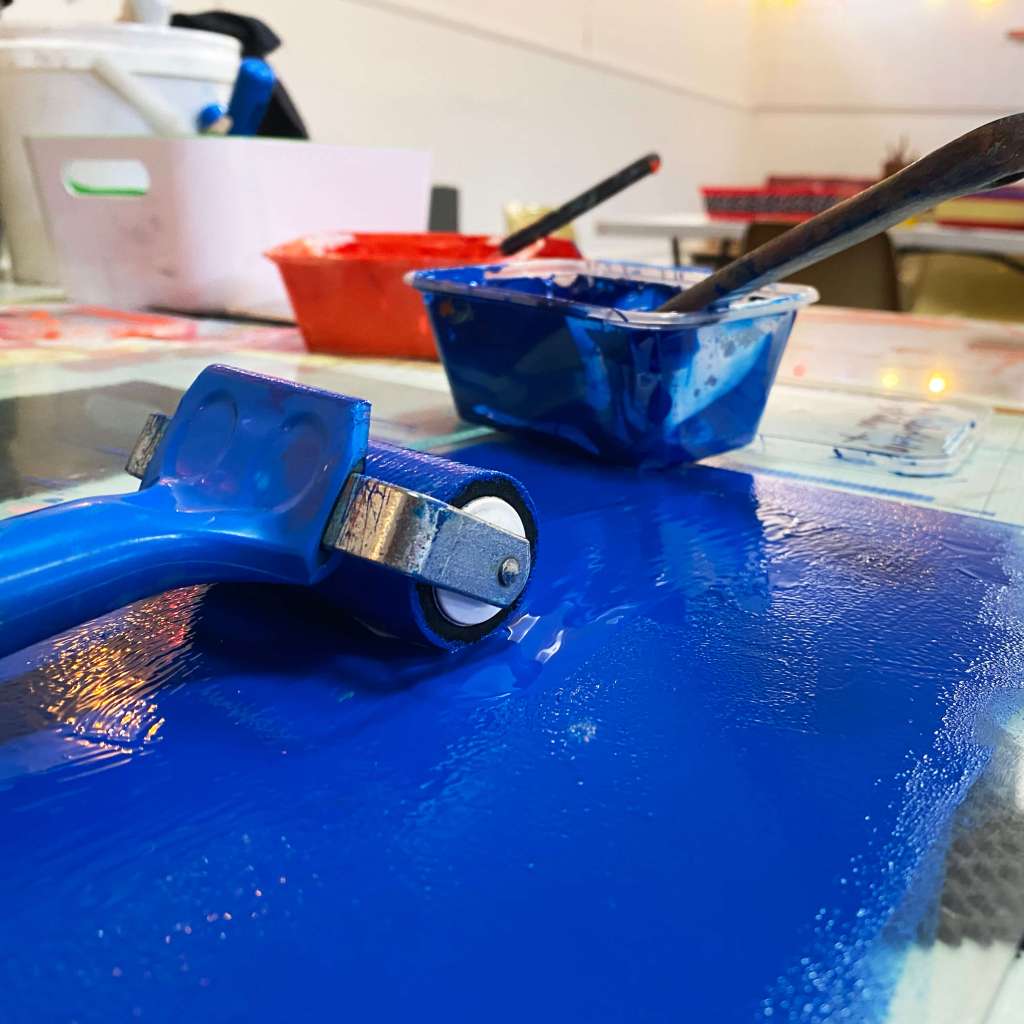
- Its fun and makes you smile
- It builds relationships and connections
- It lets you immerse into something, with full focus and attention
- It beautifies
- You learn new skills
- It activates different parts of the brain that you may not use in your day-to-day life
- It gives an outlet to emotions
- It helps you communicate
- It is relaxing and revitalising
- You achieve something new
Community Arts and Cultural Development (CACD) is the core artistic practice for the Pinnaroo Project. This positions art and cultural activity as a vehicle for improving health and wellbeing with the following artistic principles embedded within the project:
Quality
The activities will maintain a high level of artistic integrity and the quality of the work produced across all art-forms will be of an exceptional standard.
Collaboration
Professional practicing artists and cultural workers will work collaboratively with the community.
Participation
Community members will be actively involved in the creation of art and the development of artistic skills from a participatory perspective.
Authenticity
The activities will be aligned with the nature and identity of the Pinnaroo community.
Arts and Wellbeing research
The following provides an overview of some of the research undertaken – which proves compelling. The Pinnaroo Project provides an important opportunity to add to this evidence base, particularly in the context of remote Australia and community led arts and health activities.
People who engage in the arts for two of more hours per week report significantly better mental wellbeing.
Davies, Christina et al (2016) The art of being mentally health: a study to quantify the relationship between recreational arts engagement and mental well-being in the general population BMC Public Health.
Singing in a choir improves the health of older adults and reduces doctors visits.
Gene D. Cohen, MD, PhD Susan Perlstein, MSW Jeff Chapline, MFA Jeanne Kelly, MMKimberly M. Firth, PhD Samuel Simmens, PhD (2006) The Impact of Professionally Conducted Cultural Programs on the Physical Health, Mental Health, and Social Functioning of Older Adults. The Gerontologist, Volume 46, Issue 6, 1 December 2006, Pages 726–734, https://doi.org/10.1093/geront/46.6.726
Engaging in artistic, craft and social activities in both mid and later life reduces the risk of dementia.
Roberts, Rosebud O., et al. (2015). Risk and protective factors for cognitive impairment in persons aged 85 years and older. Neurology. https://www.ncbi.nlm.nih.gov/pubmed/258548679
Cultural activities at work improves mental health and reduces the likelihood of exhaustion among employees.
Theorell T1, Osika W, Leineweber C, Magnusson Hanson LL, Bojner Horwitz E, Westerlund H. (2013) Is cultural activity at work related to mental health in employees? Int Arch Occup Environ Health. 2013 Apr;86(3):281-8. https://link.springer.com/article/10.1007/s00420-012- 0762-8. Epub 2012 Mar 29.
In 2010 systematic review of research literature by Stuckey and Noble, [2] on the benefits of the arts (music, visual arts, dance and writing) considered more than 100 studies, concluding that creative expression has a powerful impact on health and well-being on various patient populations.
Stuckey, H. L., & Nobel, J. (2010). The Connection Between Art, Healing, and Public Health: A Review of Current Literature. American Journal of Public Health, 100(2), 254–263. http://doi.org/10.2105/AJPH.2008.156497.
Creative craft making improves wellbeing. A UK study demonstrates that the Social Return on Investment is 1 : 118, which means that for every £1 invested, a social value of £118 is generated, mainly in forgone treatment bills; reducing GP visits by 28% and attendance at emergency wards by 24%.
Ways to Wellbeing. Social Prescribing Program. Wellbeing Enterprises UK (2017) http://www.wellbeingenterprises.org.uk/wp content/uploads/2015/06/206921-low-res.pdf
The weight of this evidence indicates that arts interventions like those included in The Pinnaroo Project will likely have a significant positive impact.
 The Pinnaroo Project